
Goods and handling equipment
Count goods, pallets and equipment. Identify the heaviest loading condition.
Project-specific design brief. Confirm final rated load with engineering.
A freight elevator designed around your load, shaft and the way goods move through the building.
Discuss a freight project ↗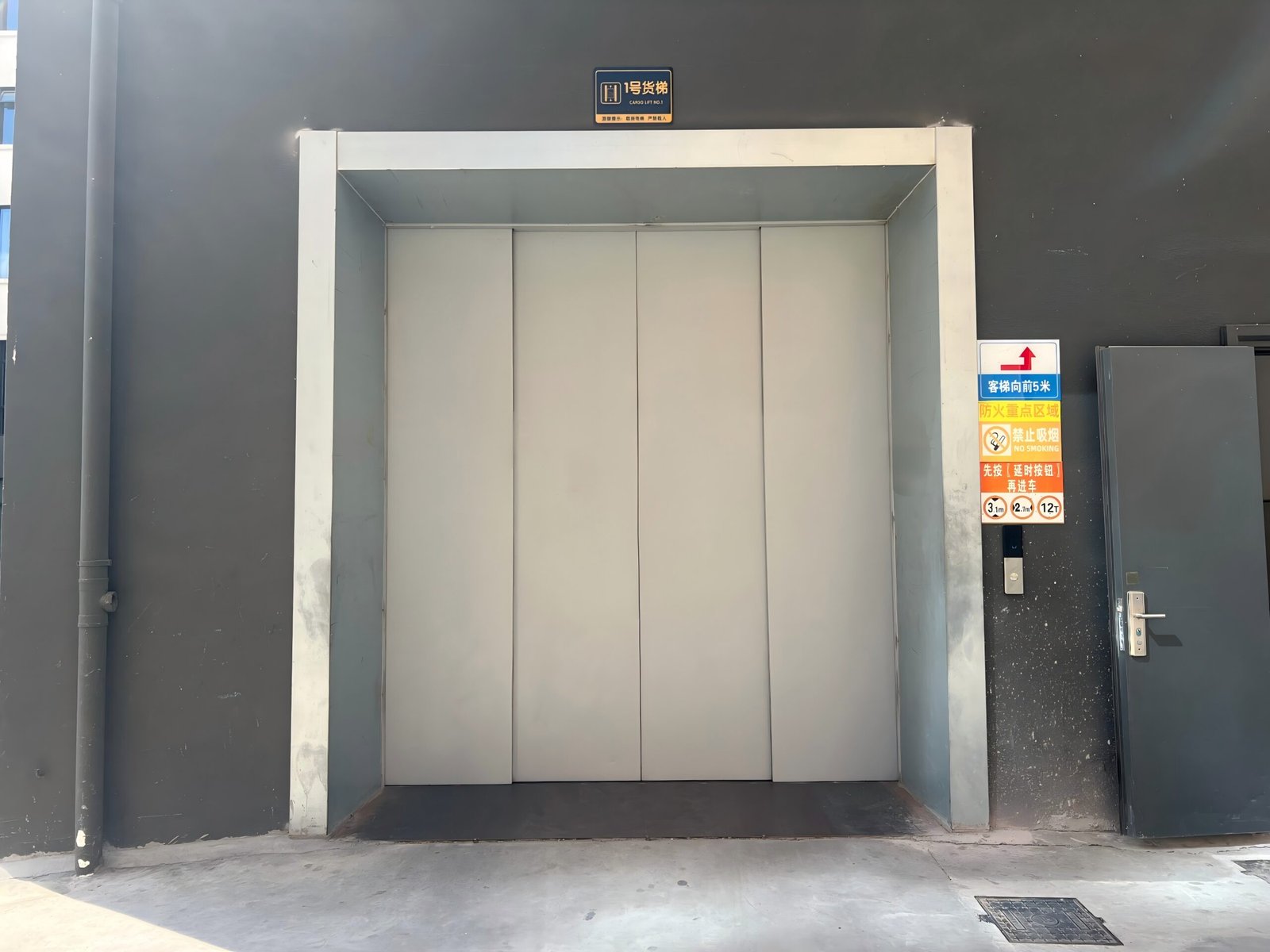
Count goods, pallets and equipment. Identify the heaviest loading condition.
Allow for the largest load and how it enters, turns and leaves.
Review travel, stops, floor conditions and the route through the facility.

See an installed 12-ton freight elevator and discuss the loading conditions for your site.
Explore projects ↗The current specification table and tested range are shown below. Higher project-specific ratings require engineering confirmation.
| Parameter | Typical Specification |
|---|---|
| Load Capacity | Up to 15,000 kg |
| Drive System | Traction |
| Machine Room | Machine-room configuration |
| Rated Speed | Project-dependent |
| Car Dimensions | Customized |
| Door Configuration | Project-specific |
| Shaft Dimensions | Project-specific |
| Control System | Microprocessor-based control with AC variable-frequency speed regulation |
| Floors / Stops / Door Openings | According to project requirements |
| Power Supply | According to project requirements |
FEIYA provides freight elevator solutions for different industrial load requirements, with tested heavy-duty configurations available up to 15,000 kg. Final load capacity is selected according to cargo weight, operating conditions and project requirements.
Yes. Car width, depth and height can be engineered according to cargo dimensions, pallets, equipment size, shaft conditions and transportation requirements.
Yes. Door width, height and opening arrangements can be configured according to cargo handling requirements and building conditions. Large industrial projects may require wider openings or multiple-door layouts.
Yes. FEIYA freight elevators are designed for factories, warehouses, logistics facilities and other industrial buildings requiring reliable vertical goods transportation.
Typical information includes required load capacity, number of floors and stops, shaft dimensions, door opening size, cargo dimensions, project location and any special operating requirements.
Rated speed is selected according to load capacity, travel height, operating frequency and project conditions. Heavy-duty freight elevators may use different speed configurations depending on the application.
Yes. FEIYA supports overseas freight elevator projects with specification selection, technical communication, production coordination and delivery support. Project configurations are confirmed according to local requirements and actual site conditions.
Share the building plans and what the elevator needs to carry.