For an overseas buyer comparing China elevator manufacturers, the most useful starting point is a project brief that separates equipment requirements from delivery and service responsibilities. Send that brief to the shortlist, then compare the drawings, supporting records and scope of each offer together.
A question such as “Who makes the best elevator?” leaves too much out. A factory moving packaged goods has different requirements from a residential building carrying passengers. An equipment-only purchase also leaves the buyer with a different set of tasks from a proposal that includes work at the site. The shortlist needs to reflect those differences.
FEIYA Elevator publishes this guide as a supplier's purchasing perspective. It is not an independent ranking, and we do not assign positions, market shares or scores to other manufacturers. Our technical example uses a report copy held in FEIYA's archive. It demonstrates how to read evidence alongside an offer, with the source limitations stated.
The building use changes the shortlist
A factory address does not automatically make the enquiry a freight elevator project. Goods may need one elevator and staff another. Similarly, a residential address does not tell a supplier whether the brief concerns a private villa or a shared passenger installation. Identify the transport task before collecting prices.
For goods, send the complete load envelope: the item, packaging and whatever carries it. State whether the handling equipment stays outside the elevator or enters the cabin. That distinction affects what must be assessed; a photograph of a large entrance cannot settle the question.
For passenger use, explain the building, served floors and expected transport needs. For a villa, describe the home and the available space. Keep unknown items visible. A supplier can help develop an incomplete brief, but the eventual proposal should say which assumptions were used.
FEIYA's elevator product range gives separate starting points for these enquiries. The passenger elevator configurations and villa elevator options concern different applications from the freight examples in this guide. Their specifications should not be substituted merely because a load figure looks similar.
For a mixed development, put each elevator requirement on a separate sheet. The commercial negotiation may cover the whole package, but the layout and evidence need to be reviewed for each offered configuration. Otherwise, an answer about one unit can quietly become an assumption about all the others.
Find the company behind the offer
Put the names from the quotation and technical documents beside each other. The brand, manufacturing entity and export seller may not be written identically. Where they differ, obtain an explanation of the relationship and identify who is contracting with the buyer. This is a question about responsibility, not a reason to reject every offer involving an intermediary.
Then direct a real layout question to the proposed technical contact. Give them the building plan and a detail that still needs resolution. Their reply should tell you what information is missing, what can be proposed and who must confirm the remaining assumptions. Keep that reply with the proposal. It is more useful than a general promise of professional service because it concerns the equipment you might order.
A company introduction can help with background, but it cannot answer a question about a particular shaft. The U.S. International Trade Administration's due-diligence guidance describes researching potential business partners. That general trade guidance is separate from elevator technical approval and does not endorse a supplier mentioned here.
For the purchasing file, record the company identity, the technical contact and the party handling commercial changes. If those responsibilities move between organisations, the handover needs to be explained. The buyer should not have to discover the division of work only after a drawing changes or a shipment arrives.
Read the model and sample before the headline claim
Here is a concrete example from FEIYA's material archive. A supplied copy of report TSX20250651 identifies model THJ15000/0.5-JXVF and sample H25-042. The record describes that sample. Before using it in a supplier comparison, the buyer would need to establish how the equipment being offered relates to it.
| Field in the archived report copy | Recorded detail |
|---|---|
| Report reference | TSX20250651 |
| Model | THJ15000/0.5-JXVF |
| Sample reference | H25-042 |
| Test dates recorded | 11–14 August 2025 |
| Rated load of the sample | 15000 kg |
| Rated speed of the sample | 0.50 m/s |
| Machine location | In a machine room |
The details above come from pages four and five of the supplied copy. This article does not independently authenticate the document with its issuer. Nor does it establish that every variant offered under the FEIYA brand has the same configuration or that the report fulfils the requirements of an overseas installation.
The date provides useful context. This is a 2026 buying guide discussing a record dated 2025. The guide's publication year does not turn the record into a new test, update its scope or make an offered configuration identical to the sample. Keep the report reference and the proposed model in separate fields until their relationship has been explained.
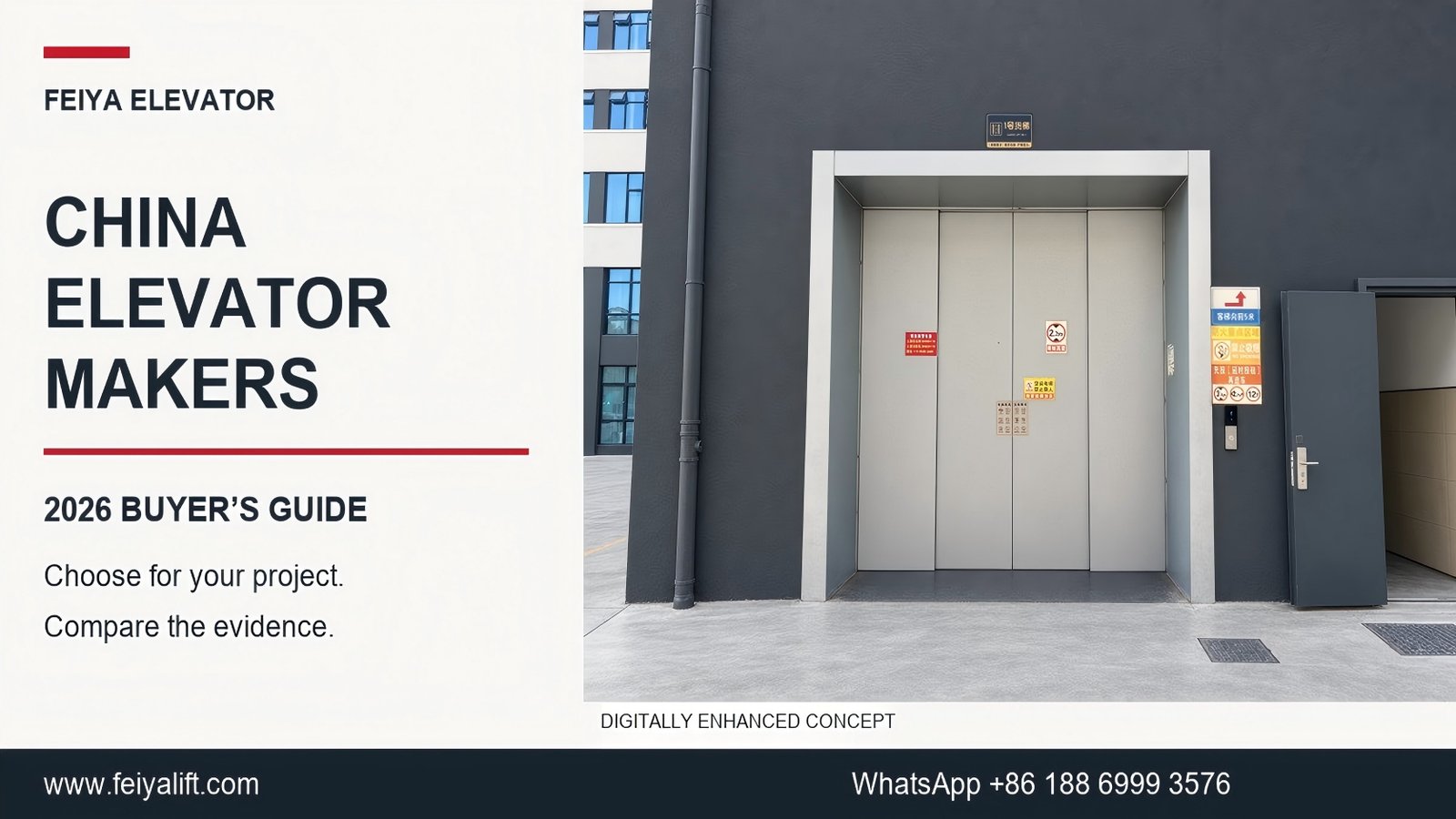
A photograph answers a different question. It can help identify the equipment and application shown, but it does not provide all the information needed to assess a loading method. A large freight entrance, for example, cannot establish permission to carry a particular forklift. That requires assessment of the actual loading arrangement and equipment information.
Catalogues need their own date check. An older parameter sheet can help with an initial conversation, but ask which dimensions and options are being offered now. If the supplier describes a development as experimental or still under validation, record that status. A development proposal and a documented existing configuration should remain distinguishable in the purchasing file.
These distinctions give the buyer useful follow-up questions: which claim does the document support, does it concern the offered model, and what verification remains outstanding? The answer should refer to the actual document. A collection of unrelated certificates or installation photographs cannot answer on its own.

Give the shortlist one enquiry to answer
An offer prepared from a verbal description and an offer prepared from a surveyed plan are not starting from the same information. Send the shortlisted suppliers one dated brief: building use, destination, served floors, intended loads or passenger requirements, and the drawings currently available.
Mark provisional values. Where a shaft measurement is missing, leave a clearly labelled question instead of supplying an estimate without explanation. If the brief changes, send the same revision to everyone still being considered. Otherwise, a difference between the quotations may simply reflect a difference in the instructions.
For freight work, the enquiry can begin with FEIYA's freight elevator configurations. The response needs to go further than the product page. It should identify the proposed arrangement, the assumptions behind it and any departure from the requested cabin, entrance or loading method.
Compare the departures before the price. A smaller cabin, a different entrance position or an unresolved handling requirement may change how the building will operate. “Customised” does not remove the need for defined dimensions. It should lead to a drawing that the project team can review.
Keep a decision column in the comparison sheet: accepted, clarification required or not suitable for the brief. Add the reason and the document revision. Those labels are more informative than an unexplained numerical score, especially while important measurements remain unconfirmed.
Write the unpriced work into the comparison
The quoted total may be clear while the work around it remains undefined. Build a scope table with a row for each task, including those for which no price has yet been provided. That exposes a gap without pretending to know what it will cost.
| Task to allocate | A useful question for the offer |
|---|---|
| Packing and transport | What package and named delivery destination does this price cover? |
| Unloading and storage | Who arranges the handling equipment and storage conditions? |
| Building preparation | Which interfaces must the building team complete before installation? |
| Installation and commissioning | Who performs the work, and what assistance does the equipment seller provide? |
| Local project documentation | Which documents come from the supplier, installer and local project team? |
An existing installer can help fill in those rows. If no installer has been appointed, mark the responsibility as unresolved. The supplier may be able to clarify its own support scope, but an equipment-only price should not be interpreted as a commitment to perform all site work.
For transport, have both parties confirm the delivery boundary and named place in the commercial documents. Identify handling or storage outside that boundary. A delivery term written next to a price is not enough if the parties are discussing different destinations or different tasks.
Destination documentation requires local review. Identify the appropriate professionals who will establish the project requirements and review the material offered. Keep any question about document applicability open until it has been resolved. The sample report discussed earlier cannot, by itself, settle every requirement for an installation in another country.
Finally, put the delivery period beside the milestone that starts it. Drawing approval, receipt of required information and other agreed events should be recorded as stated in the offer. If the drawings change, obtain confirmation of the effect on the schedule. There is no standard lead time in this guide that can replace a supplier's commitment for the actual order.
Let the installer review the support offer
The people who will install and maintain the elevator can identify questions that a price comparison misses. Give them the proposed configuration and available documentation while the supplier decision is still open. Their questions may concern drawings, component identification or the procedure for requesting help.
Work through one practical support question: if the local team needs a replacement component, what information must it send and who handles the request? The answer should connect the component to the offered equipment. A general statement about spare parts does not establish stock in the destination country or a delivery time for every part.
Also establish the boundary between remote assistance and work at the site. A supplier may provide technical guidance while a local service provider performs the physical work. Confirm the available document language and the contact route, rather than assuming that a sales conversation describes the eventual service arrangement.
Keep warranty terms with that support information. Record the starting event, duration, coverage, exclusions and claim process given in the offer. A headline duration tells the buyer little without those details. If the local maintenance contract and equipment warranty allocate different responsibilities, resolve the questions before ordering.
Decide what must be resolved before the order
Bring the current layout and commercial offer to the same review. Use the drawing number and revision to check that they describe the same equipment. Move any unresolved matter into a short query list with a responsible party and the information needed to close it.
Some questions can prevent a decision: whether the proposed arrangement fits the building, for instance, or who will perform installation. Others may be choices among acceptable options. Keeping those groups separate helps the buyer avoid spending the review on minor preferences while a basic responsibility remains undefined.
Keep the reasons for the supplier choice in the purchasing record. They might include the proposed configuration, the relevance of the supplied evidence and the agreed local service arrangement. An unexplained score or a position in a promotional list is difficult to review later; a decision tied to named documents is much clearer.
For an enquiry to FEIYA Elevator, send the building use, destination, served floors and available plans. Freight projects also need the cargo and handling information. Say whether the request is for an early budget or a proposal ready for detailed review, and identify the measurements still to be confirmed.
Discuss your elevator requirements with the team. The next step is to turn that brief into a defined proposal whose assumptions, technical evidence and delivery responsibilities can be reviewed by the buyer, supplier and local project team.
Planning an Elevator Project?
Share your project requirements with FEIYA. We can review the available information and discuss suitable elevator configuration options based on your project conditions.