
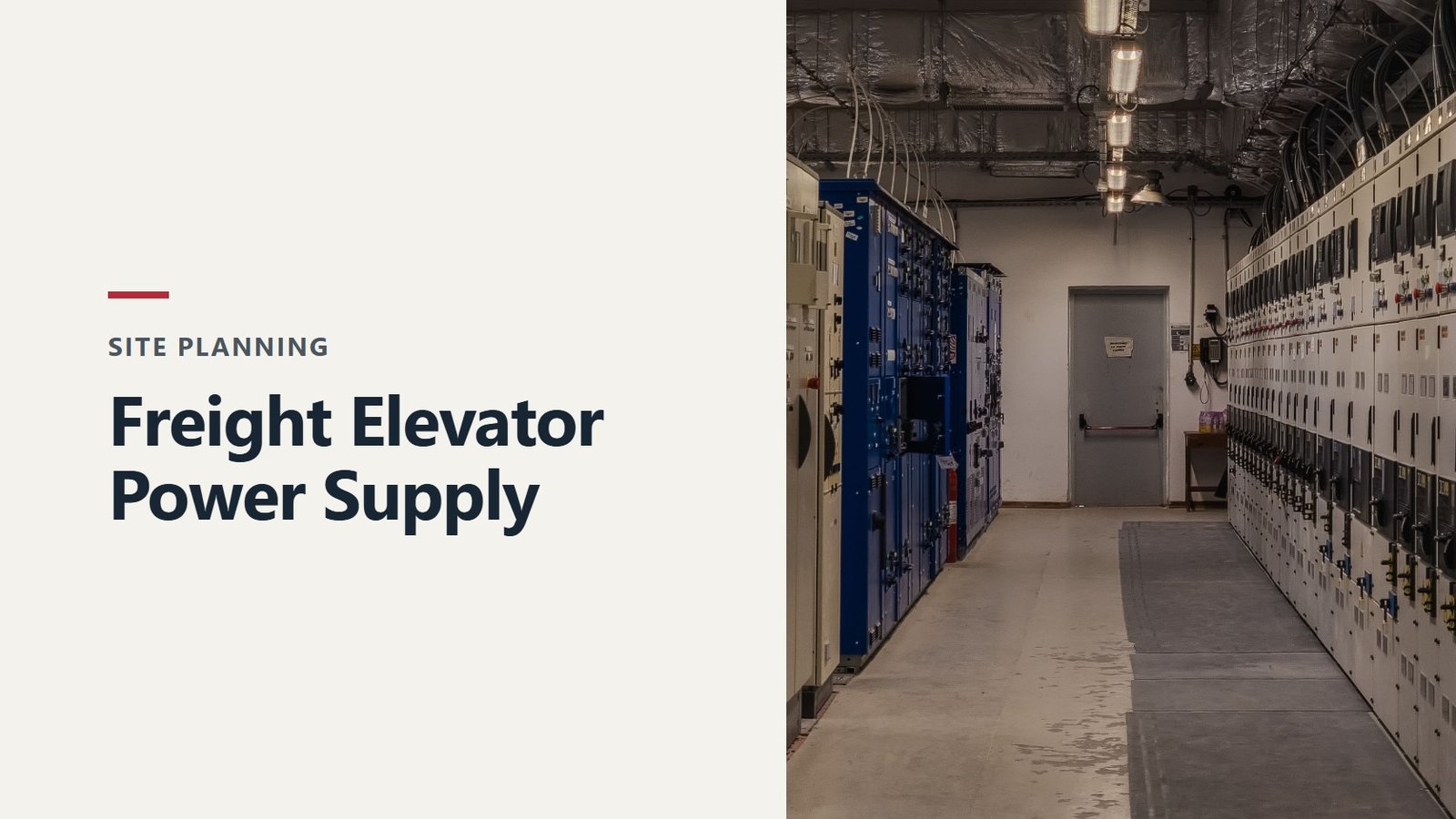
Freight elevator power requirements need a project-specific answer. Before ordering, give the supplier verified information about the available site supply and ask for the electrical requirements of the proposed elevator arrangement. A load rating, motor label or photograph of a landing panel does not provide the complete information needed to coordinate the building connection.
For a purchasing team, the useful deliverable is an agreed electrical information sheet with clear responsibilities and a drawing reference. This FEIYA Elevator guide explains what to put on that sheet, which questions to resolve with the site electrical team, and how to keep the information aligned with the order. It is a procurement guide, rather than a wiring or protective-device design instruction.
Separate what the site has from what the elevator needs
Begin with two sets of information. One describes the supply available at the intended installation. The other describes the incoming electrical requirements of the equipment being proposed. Keep their sources visible. A statement from a building manager, a preliminary enquiry response and a supplier's approved electrical schedule have different roles in the review.
Ask the site electrical team to confirm the relevant supply details and the point to which they apply. Give the supplier the project location and identify whether the information describes the existing installation or a planned alteration. If an upgrade is still being considered, state that explicitly instead of presenting the proposed supply as already available.
Then ask the elevator supplier to respond against that brief. The response should identify the proposed equipment and the document revision on which its requirements are based. If the site information changes, the supplier needs an opportunity to review the affected proposal. Agreement on the rated load and number of stops does not settle the electrical interface by itself.
Request a verified site information package
Useful starting fields include supply voltage, frequency and phase arrangement, together with the proposed connection location and available building documentation. Have the responsible electrical team identify the supply and protective arrangements relevant to the enquiry. Where a value has not been checked, leave it as an open item with a named contact rather than inserting a familiar figure from another project.
A country name alone is too broad a purchasing brief. An existing building may have several distribution arrangements, and the proposed connection may not be at the point represented by a document supplied early in the enquiry. Ask which drawing or schedule describes that location. Include a revision and date so the answer can be traced during technical coordination.
Photographs can help identify locations when supplied by the responsible site team, but they should accompany the documents and confirmed information. A visible socket, call button or lighting fixture is not a reliable statement of the supply proposed for the elevator. Keep measurements and technical confirmation with the people responsible for the electrical installation.
Read the equipment field before using its number
The word “power” can refer to different things in a quotation or technical document. Ask whether a figure describes a motor component, an equipment input requirement or another stated operating condition. Keep its unit and the supplier's explanation attached. A number copied without its heading can create an apparently precise answer to the wrong question.
One FEIYA document illustrates this distinction. The archived type-test report TSX20250651 for sample H25-042 contains a motor subsection with rated power, voltage, current and frequency fields. Those entries belong to the component section of that particular sample's technical table. They should not be copied into a building supply schedule as though the report were an electrical connection design for a new installation.
Source: FEIYA archive FY-SRC-004, PDF page five, fact FY-F067. This is a supplied report record, without independent authenticity verification. The example explains how to read the scope of a field; it does not prescribe the incoming supply, cable size or protective settings for another project. Request the proposed elevator's electrical requirements for those discussions.
Put the supply boundary on a drawing
Ask where the building team's work ends and the elevator supplier's scope begins. Identify the agreed connection point on the relevant project document. Clarify responsibility for the associated building works, equipment supply, installation and verification. A broad quotation phrase such as “electrical work by others” needs enough detail for the responsible team to price and plan its own part.
Discuss the proposed locations of the controller and other relevant equipment with the supplier. Do not assume that the position of a landing call panel identifies the incoming supply point. The diagram below brings three items into one view: the site supply information, the agreed connection point and the equipment requirements for the proposed elevator.
Coordination also needs to cover any separate supplies or related services identified for the proposed arrangement. Ask the supplier and site team to define the actual scope instead of assuming that one connection description covers everything. The freight elevator product page is a starting point for discussing the equipment; the project documents need to establish its particular interfaces.

Keep the electrical questions in one register
The following register is a purchasing aid. It records who must provide or confirm information, while leaving the technical selection and verification with the responsible project parties.
| Topic | Information to record | Question to close |
|---|---|---|
| Available supply | Confirmed site details and document reference | Which location and installation do these details describe? |
| Proposed equipment | Elevator arrangement and supplier revision | Which proposal do the electrical requirements belong to? |
| Input requirements | Supplier's requirements with units and scope | Have component values been distinguished from incoming requirements? |
| Connection boundary | Referenced location and responsibilities | Who supplies, installs and verifies each side of the interface? |
| Related services | Supplies and interfaces identified for the project | What is included, separate or still to be confirmed? |
| Operating needs | Normal use and requested response to supply interruption | What behaviour is included in the proposed arrangement? |
| Site readiness | Required documents and confirmation status | Who will confirm readiness before the agreed installation stage? |
Keep an unresolved entry visible until the responsible party answers it. A complete-looking sheet filled with assumptions is less useful than a shorter register that shows the remaining questions. The freight elevator cost guide provides context for separating equipment quotation factors from the wider project budget.

Explain what should happen during a supply interruption
Describe the operational need before requesting a backup arrangement. A warehouse may want a defined response when supply is interrupted, while another buyer may be asking whether goods movements can continue under an alternative source. These are different questions. Ask the supplier to explain which functions and conditions its proposal covers, including any limitations that need to appear in the order.
If the building has or plans an alternative power source, provide its relevant information through the site electrical team for review with the elevator supplier. Do not infer compatibility from the existence of a generator or from a motor power figure alone. The agreed response should be coordinated with the building's electrical arrangements and the proposed elevator equipment.
Record the intended operating brief in language the purchasing team can compare across offers. “Backup included” leaves too much unspecified if suppliers interpret it differently. Ask what is supplied, what the building must provide and what will be demonstrated or confirmed at the appropriate project stage. Avoid promising uninterrupted service unless the actual proposed arrangement supports that commitment.
Distinguish installation readiness from normal use
Confirm what electrical information and site provisions are needed for installation, testing and the final operating arrangement. A temporary provision used during construction should not become the assumed permanent supply without the responsible teams reviewing it. Put the relevant readiness conditions into the project schedule, together with the party that will confirm each item.
Coordinate those dates with building works and equipment delivery. An elevator arriving on site does not establish that the electrical interface is ready. Conversely, a supply point being available does not mean every related service or document is complete. The B2B import and procurement guide discusses the broader division of supply, local installation and project responsibilities.
Keep completion evidence with the handover documents agreed for the project. The form of that evidence and any local requirements should be confirmed by the responsible parties for the actual installation. Purchasing can help by ensuring that the order states the required documents and responsibilities, rather than leaving them to an informal conversation near delivery.
Recheck the interface when the proposal changes
Ask whether a change to the elevator arrangement affects the previously issued electrical information. Equipment selection, intended operation or the site supply may change while the commercial discussion continues. Refer the revised brief back to the appropriate technical teams and obtain an updated response where needed. Keep the revision that was actually reviewed with the order.
Use the same information package when comparing suppliers. If an offer excludes a building item that another offer assumes is available, resolve that difference before treating their prices as directly comparable. Separating the equipment price from the building electrical scope makes the purchasing decision easier to explain and reduces ambiguity in the eventual responsibility list.
Questions buyers often ask
Can I choose the power supply from elevator capacity alone?
No. Provide the intended load, travel and operating brief, then request the proposed equipment's electrical requirements. The load rating is part of the equipment discussion; it is not a substitute for an agreed incoming supply specification.
Is the motor nameplate enough for my electrical team?
It may provide useful component identification, but ask for the electrical documents for the proposed installation. A motor rating and the complete elevator's incoming requirements describe different scopes. Keep the document heading, equipment reference and supplier explanation with each figure.
Should I request one universal voltage for every export order?
Use the verified information for each site and the supplier's response for the actual proposal. A purchasing template can standardise the questions without predetermining the answers. Resolve any mismatch before approving the order arrangements.
Prepare the supply brief with FEIYA Elevator
Send verified site supply information, available electrical drawings, the proposed equipment brief and any required response to supply interruptions. Identify the electrical coordinator and keep uncertain items marked for confirmation. Include the project location and the planned building and installation responsibilities.
Contact FEIYA Elevator with those materials so the proposed equipment and building interface can be reviewed together. A clear information package gives the purchasing team a firmer basis for comparing scope and carrying the agreed requirements into the order.