
Plan a warehouse freight elevator around the busiest period you need to serve. Count the loads that become ready in that period, trace where they go and estimate how long the elevator remains occupied by each transfer. Then check whether the loading and receiving teams can sustain the same pace. A daily volume total can hide a short queue that matters to a dispatch cutoff or a production handover.
Start with the warehouse activity you want the elevator to support. The aim might be to clear a wave of outbound pallets before a truck closes, replenish a picking floor before the next shift or return empty carriers without delaying urgent goods. Each task creates a different pattern of calls and handoffs. This FEIYA Elevator guide turns those patterns into a practical review for operations and purchasing teams.
Count ready loads in the busiest window
Use a window that reflects a real operating event. A dispatch team may release loads in waves, while receiving may release them as individual vehicles are unloaded. Record when each load is ready for vertical movement, rather than when its order was entered. Those times tell you when demand reaches the elevator.
Separate movements by origin, destination and handling method. Include empty carriers, return trips and other planned users of the same elevator. Label which loads can wait and which are tied to a deadline. Use the handling unit that operations can actually count, such as a loaded trolley or pallet. Keep weight and packed dimensions as separate fields so that the demand count does not imply that every unit can travel together.
Collect several representative windows where possible. Identify unusual events such as a late truck, a blocked unloading area or an interrupted shift. A peak observed during an exceptional disruption can still be useful, but it answers a different question from a normal busy day. Keep the observation and its context together when sharing it with suppliers.
Measure the full trip and the handoff
Walk through a representative transfer with the teams responsible for each landing. Record the wait for the car, the time needed to enter and position the load, travel, unloading and any return or repositioning before the next movement can begin. Separate waiting before the elevator is available from time that the elevator is occupied. This helps identify whether the queue comes from competing calls, slow loading or an unavailable receiving area.
For a repeated route, define the start and end of the cycle consistently. If your cycle begins when the car is available at the loading floor, the return needed to make the next car available belongs in that cycle. If traffic runs both ways and a useful load can travel back, record that actual route separately. Avoid counting the return as additional useful capacity unless the operating plan actually supplies a suitable return load.
Record how goods are moved at the threshold. A trolley that enters the car, a pallet transferred from the landing and a forklift expected to enter create different equipment and workflow questions. The forklift loading guide explains the information to bring to a project review for that handling method.
Give waiting goods a place away from the approach
Mark the origin and destination landings on the same floor plan. Show where a load waits before its turn, how it approaches the entrance and where it goes after unloading. Include trolley handles, turning movements and any area shared with other warehouse traffic. Ask operations to walk the busiest sequence on the plan, including a load waiting while another is being removed.
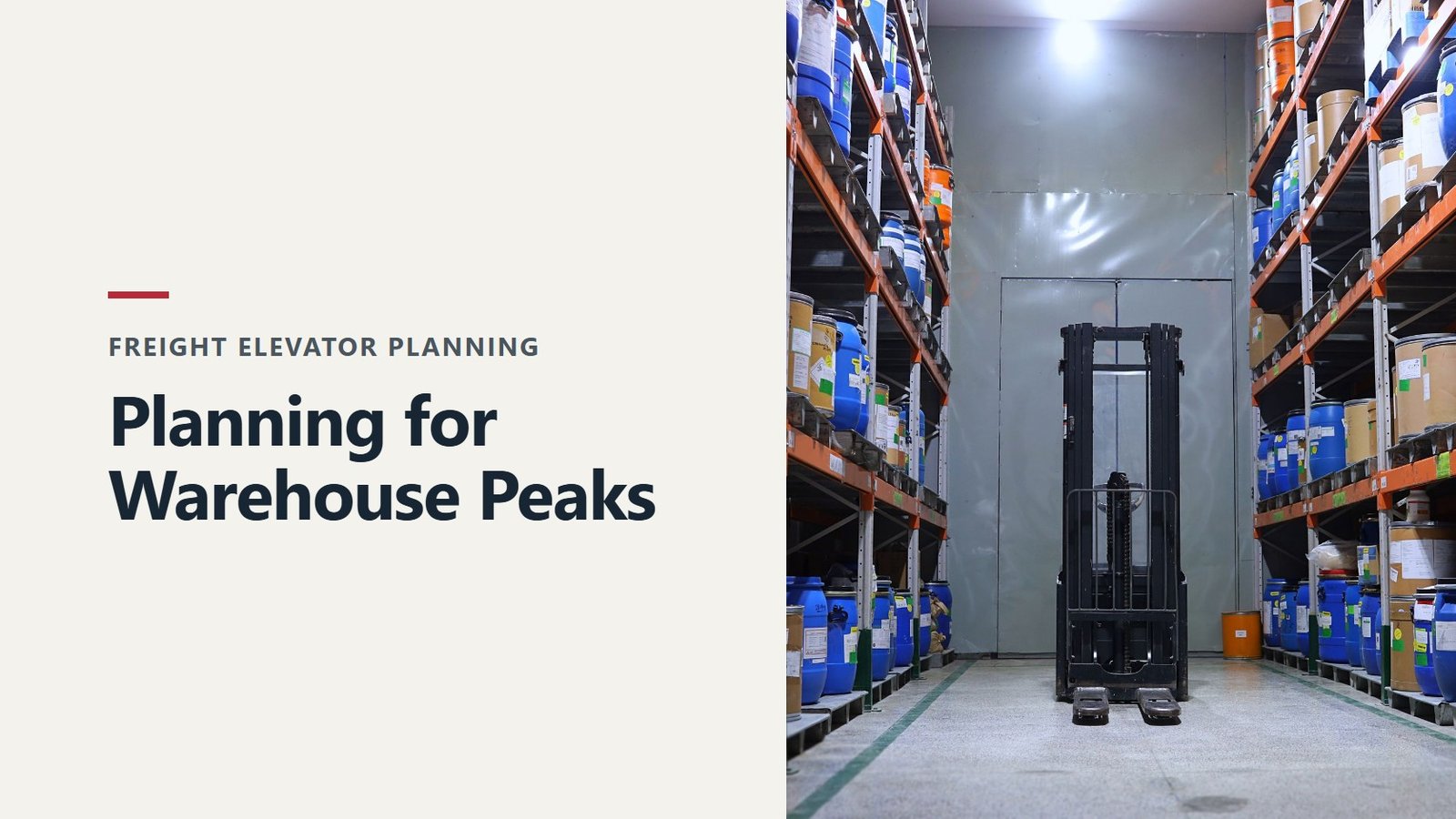
An elevator may be available while the destination team has nowhere to put the next load. Record that delay under receiving or staging so that it remains visible in the analysis. The photograph accompanying this section shows goods near an industrial freight entrance. It gives readers a concrete view of the relationship between the approach and nearby goods. Site layout and operating observations are needed to determine a suitable staging arrangement for a new project.

Compare the peak with a simple cycle estimate
Consider a hypothetical half-hour window with eighteen equivalent loads ready. Suppose an agreed planning scenario allows two loads per full cycle and uses five minutes per cycle, including return and normal handling time. Six complete cycles would move twelve loads in that window, leaving six waiting at the end if the elevator starts available and all other assumptions hold. These figures are invented to demonstrate the method. The result describes that particular scenario and should be recalculated using project information.
Now consider the effect of arrival timing. If all eighteen loads arrive together, the queue forms immediately. If they arrive in smaller waves, the same total can create a different maximum queue and different waiting times. Use the time sequence when the concern is a blocked landing, a missed handover or a load that cannot wait until the end of the window.
| Planning input | What to record | What it helps you decide |
|---|---|---|
| Peak window | Ready loads by time, floor pair and deadline | Whether several teams compete for the same elevator |
| Cycle | Handling, door operations, travel and repositioning | Where time is spent and what assumptions drive the estimate |
| Loads per trip | Agreed loading arrangement and load mix | Which loads can be grouped in the scenario |
| Landing space | Waiting area, approach and destination clearance | Whether the transfer can proceed as planned |
| Recovery | Remaining queue and arrivals after the peak | Whether the team has time to clear the backlog |
Test changes against the cause of the queue
If the queue forms because everyone requests the elevator at once, first compare a staggered release with the existing schedule. Record who decides when a load is released and how exceptions are handled. A dispatch deadline may make staggering impractical for some goods, while replenishment or empty-carrier returns may have more flexibility. Agree a priority rule that staff on both floors can follow.
If unloading takes longer than travel, compare changes to destination readiness before attributing the problem to equipment speed. Check whether the receiving team is present at the required times and whether the goods can move away promptly. The factory material-flow planning guide covers related questions about handoffs and return flows in industrial operations.
If demand still exceeds the workable transfer rate, take the evidence to the supplier and building team. Ask them to compare the proposed loading arrangements and layout options using the same busy window. A bigger car may make a different load grouping possible if the complete arrangement is suitable and verified. A different layout may shorten handling at one landing. Describe the change and which part of the cycle it is expected to affect so that proposals can be compared on the same basis.
Give suppliers a comparable peak-hour brief
Send the load schedule and a drawing for every relevant floor. Include the peak window, handling method, typical and unusual loads, shared uses and priorities. State how the cycle was observed or estimated. If an input comes from a planning assumption, label it so the supplier can explain what needs confirmation. The warehouse freight elevator selection guide provides the wider context for matching the elevator to the building and goods.
Ask each supplier to identify what its proposal assumes about the loads per trip, door operations, travel and time at the landings. Keep the assumptions about staff, staging and coordination with the warehouse team. A proposal may describe equipment characteristics while the transfer estimate also depends on local operations. Ask what information is still needed to close that gap and what evidence can be reviewed before the order.
Agree how the team will assess the operation after installation. You may want to observe a defined peak wave, record the queue at agreed times and check how long it takes to clear. Choose measurements that correspond to the actual business concern. A dispatch team may care about the last load reaching the outbound floor before a cutoff, while a picking team may care about waiting between replenishment trips.
Questions warehouse teams often ask
Is a daily pallet total enough to specify the elevator?
Use it as context and add the busy windows, floors and handling sequence. Two operations moving the same daily volume can require different service during a short overlap between receiving and dispatch. Record the loads that become ready in the overlap and which ones have deadlines.
Should empty return trips be included?
Include the repositioning and returns that use the elevator during the window. A return may carry a useful load if the arrangement and demand allow it. Record it in the route sequence so it is counted once and its effect on the next call is visible.
What if we do not have an existing elevator to time?
Build a provisional scenario using planned routes, trial movements where practical and information from the proposed supplier. Separate site handling assumptions from equipment inputs. Compare a slower handling scenario with the working estimate and ask the project team which measurements would make the greatest difference to the decision.
Prepare your peak-hour project brief
Bring your load schedule, floor routes and available layout drawings when reviewing FEIYA elevator solutions. Mark the busiest window and the landing where waiting loads are most likely to interfere with the next transfer. Identify the people responsible for release, loading and receiving so their assumptions can be checked together.
Contact FEIYA Elevator to discuss your warehouse plan. A clear peak-hour brief gives the supplier a concrete basis for reviewing the equipment proposal and gives your operations team a way to compare it with the workflow it needs to run.