
“We need a 5-ton freight elevator. We use a forklift.”
An enquiry like this leaves the supplier with two very different possibilities: the elevator might carry a pallet after the truck has withdrawn, or it might carry the truck as well. Ask which of those jobs the supplier has priced. Until that is written down, two offers headed “5 ton” might not describe the same equipment duty.
This FEIYA Elevator guide is for buyers preparing that first enquiry. A useful covering note identifies the attachments and explains the movement they describe. A catalogue page might identify the truck perfectly while saying nothing about your intended use of it. The receiving team needs the second part of that information too.
Start with three lines about the job
The following blank brief is a writing aid, not a project record. The bracketed spaces are yours to fill in.
Goods: [one loaded pallet, its outside dimensions and complete weight].
Loading: [truck model] moves the pallet from [waiting position] to [position in the cabin]. The truck [stays outside / enters and withdraws / travels].
Receiving: at [destination floor], [person or equipment] removes the load through [the same side / another entrance].
Now sketch those movements. On a preliminary sketch, a measurement without a source is ambiguous. Was it taken from the building drawing, measured yesterday, or estimated for the discussion? Put that information beside the dimension. Include the floor name and show the start and finish of the transfer so that the drawing can be understood without a telephone explanation.
There may be an unresolved equipment purchase at the other end of the route. If a truck loads downstairs and stays there, the receiving floor needs a means of taking the pallet out. Add the proposed receiving equipment to the sketch or label it “selection pending”. This stops an undecided handling method from appearing settled in the elevator enquiry.
Three meanings of forklift loading
| What the truck does | What to put in the enquiry |
|---|---|
| Stays on the landing | Describe the transfer point and the equipment that moves the goods across the entrance. |
| Enters to place the load, then reverses out | Supply the truck data and a sketch of its route through the entrance and over the cabin floor. |
| Travels to another floor with the goods | Supply the complete travelling load, overall dimensions and proposed operator arrangement. |
The middle row deserves attention. The truck might never ride upstairs, but its wheels still pass over the entrance and cabin floor while loading. Tell the supplier about that temporary entry. Do not let a quotation describe the job merely as “pallets transported”.
The first row also needs a workable transfer method. Describe the equipment used for the last part of the journey across the entrance. If the proposal depends on an extra ramp or bridging piece, stop and refer that interface to the project professionals. It should not become something the site team improvises after delivery.
Put the truck’s own weight on the sheet
On the truck specification, find the entry for vehicle weight. A truck advertised by lifting capacity has not thereby supplied its own mass. For an unclear data sheet, an enquiry to the truck supplier can be very short: “Please identify the working weight of this model with the battery and attachments specified in the attached configuration.”
Record that configuration beside the weight. Battery, attachments and other equipment can be dealt with differently in the information supplied. The aim is a complete breakdown without omissions or double counting.
One useful layout is:
- Truck in the stated working configuration: ___ kg.
- Goods: ___ kg.
- Pallet or other separate carrier: ___ kg.
- Other applicable load not already included: ___ kg.
- Source and configuration of the truck weight: ___.
Before adding the figures, check the units and the configuration against the source documents. Keep a separate entry for information still missing. A subtotal assembled from an unconfirmed truck weight is not ready to be treated as a design input. Even a complete subtotal leaves the permitted loading arrangement, local requirements and suitability of the floor and entrance to be reviewed.
For background on counting the truck together with its load, see the US OSHA page on forklifts and elevators. It is a US reference. For a project elsewhere, put the applicable local requirements on the confirmation list with the responsible local team. This guide is collecting information for review; it is not granting approval to operate an installation.
What if wheel-load figures are missing?
Use a small record for the truck information, with room for a reply from its supplier:
| Information | Source or action |
|---|---|
| Make, model and fitted configuration | Attach the matching data sheet. |
| Working weight | Identify the included battery, attachments and equipment. |
| Loaded axle or wheel data | Request the relevant data from the truck supplier if absent. |
| Tyres and wheel arrangement | Attach the available specification or drawing. |
| Entrance and cabin review | Ask the elevator supplier to respond against this truck information and the proposed route. |
An equal division of vehicle mass among the wheels is not measured wheel-load data. If that is all the enquiry contains, leave the wheel information unresolved. The route drawing should show the truck’s entry, stopping position and any change of direction for the technical review.
At this stage, “heavy-duty steel floor” is an incomplete answer. It describes neither the full supporting structure nor the loading condition assessed. A floor photograph has the same limitation. Ask what use the proposal covers and have that answer recorded with the technical documents.
For a change to an existing elevator’s loading method, the file starts with that installation’s identification and available records. Refer the proposed change to its responsible service provider. Information about a different product cannot close that review.
The doorway and the route beyond it
Measure the loaded vehicle in the configuration that will approach the door. Include projecting goods and attachments. Use a sketch of the complete loaded vehicle to locate each measurement. That gives the recipient a way to see whether a figure stops at the pallet edge or includes a projecting attachment. Label the height for the configuration used to approach the entrance.
On the elevator proposal, look for clear entrance width and height. On the building plan, find the approach route. Have the proposed load position marked inside the cabin drawing too. Put a reference to that drawing beside the entrance dimensions, so the opening and the intended position can be reviewed together.
Mark the nearest obstruction on the approach drawing, whether it is a column, rack or wall. Give the project team the truck’s turning information with that drawing. An opening width alone says nothing about the turn around the obstruction, and another project’s clearance is not a measurement of your site.
For an optional second entrance, prepare a separate layout option. Label which floors use each opening, then request review against the building and proposed equipment. Treat it as an option under discussion until the arrangement is agreed.
Write down whether the operator travels
Use a direct statement in the brief: “The operator needs to travel with the load,” or “No person is intended to travel.” Have the permitted arrangement confirmed for the selected lift type and the destination’s requirements.
Do not infer permission from cabin size, rated capacity or the word “freight”. Add the proposed receiving arrangement beside this statement. For a load travelling alone, identify who or what is waiting at the destination. For accompanied travel, leave a named confirmation item in the technical review: has the supplier and the local team accepted the intended use for this particular equipment?
The local installer and the person responsible for warehouse operations should both see this part of the enquiry. It affects the real job they will have to deliver and operate.
Add the work pattern and the quote boundaries
Give the supplier the busiest expected period, the floors exchanging goods and the loaded transfers needed. Where you have observations of the present process, include loading and receiving time. A forecast can be used for discussion, provided the sheet labels it as an estimate rather than an observation.
Look for a description of the complete handling cycle in the proposal discussion. What time has been allowed for loading and receiving? Is the return journey empty? Which other users need service in the same interval? Ask for the proposed handling calculation to include those calls, or to state explicitly that they have been excluded. This makes the basis of a throughput discussion visible rather than leaving it hidden behind a travel-speed figure.
Use the enquiry revision as a reference on your comparison sheet. Under each supplier, quote its description of the truck movement. If one says “pallet loading” and another refers to the truck entering, send a clarification before treating the prices as alternatives for the same job. The proposed openings, cabin and included supply also belong on that list. For the budget beyond equipment supply, use the separate freight elevator cost guide.
Your enquiry file
Start an enquiry through the FEIYA freight elevator page with the destination, floor plans, truck data and loading sequence. Include a contents note with the attachments: which truck sheet, which floor-plan revision and which load breakdown? Put the unanswered questions immediately after that note. A supplier can then see what the file contains before opening several drawings.
For heavier-load enquiries, FEIYA’s confirmed capability includes 15-ton freight elevator solutions. Send the same truck and route information for those enquiries as for smaller loads. Project suitability, including wheel loads and the handling arrangement, remains subject to review of the particular configuration.
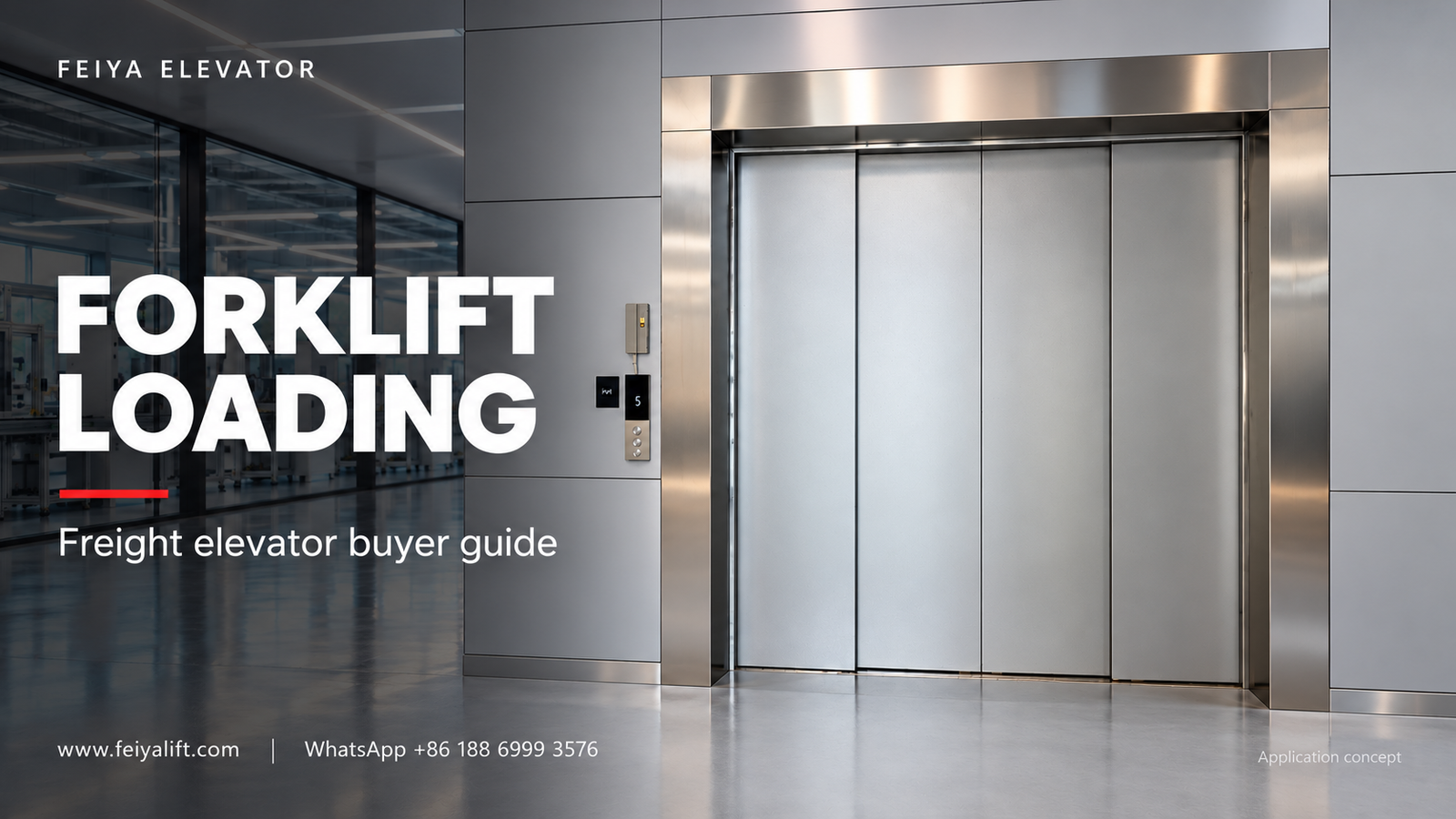
The cover uses a real entrance photograph from the FEIYA archive’s 5-ton project folder. It illustrates an entrance, not a verified forklift application. The photo cannot establish the permitted use of that installation or represent all available capacities.
Request a forklift loading review
Send your truck model, complete load breakdown, route sketch and destination to FEIYA Elevator. Include the intended operator arrangement and the questions you still need to resolve.



4 Comments